Who we are
African Crossroad Development is a nonprofit organization working with communities that sit at the far edge of national health and education systems in West Africa.
We were founded on a single observation. The girl who misses her vaccination is often the same girl who drops out of school. The woman who has never been screened is often the same woman with no health coverage and no way to pay for a referral. Treating those problems as separate programs wastes the one visit a family may give you all year.
So we do not treat them separately. We treat the household as a whole, and we measure whether it worked.
How we work
We work through existing structures, not around them.
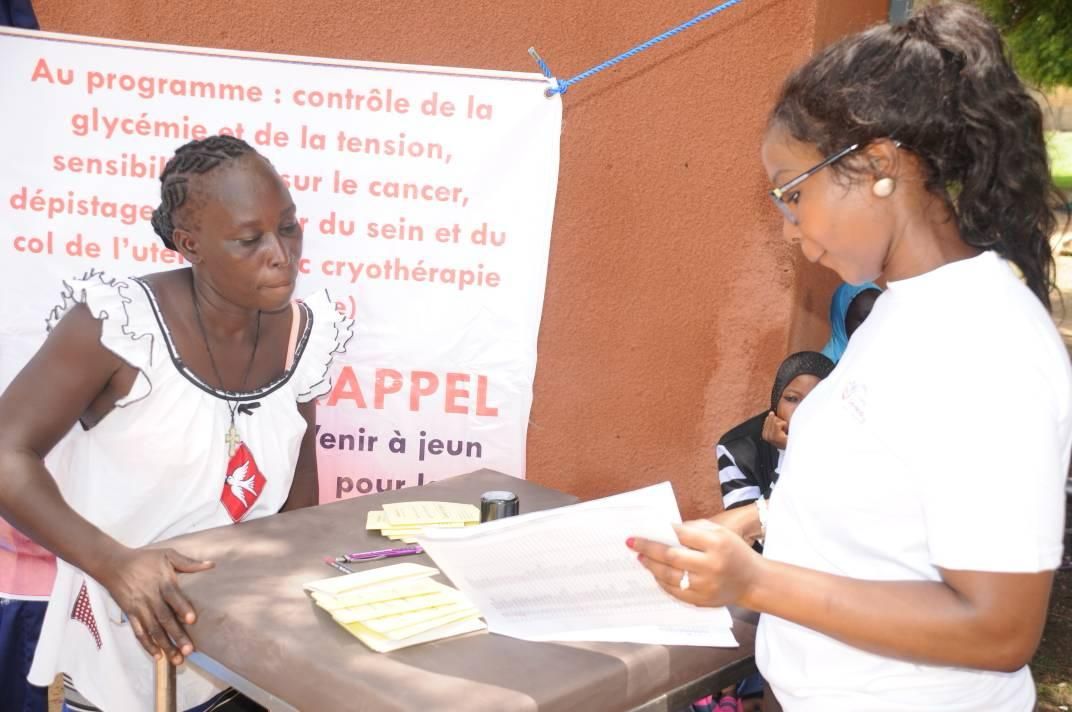
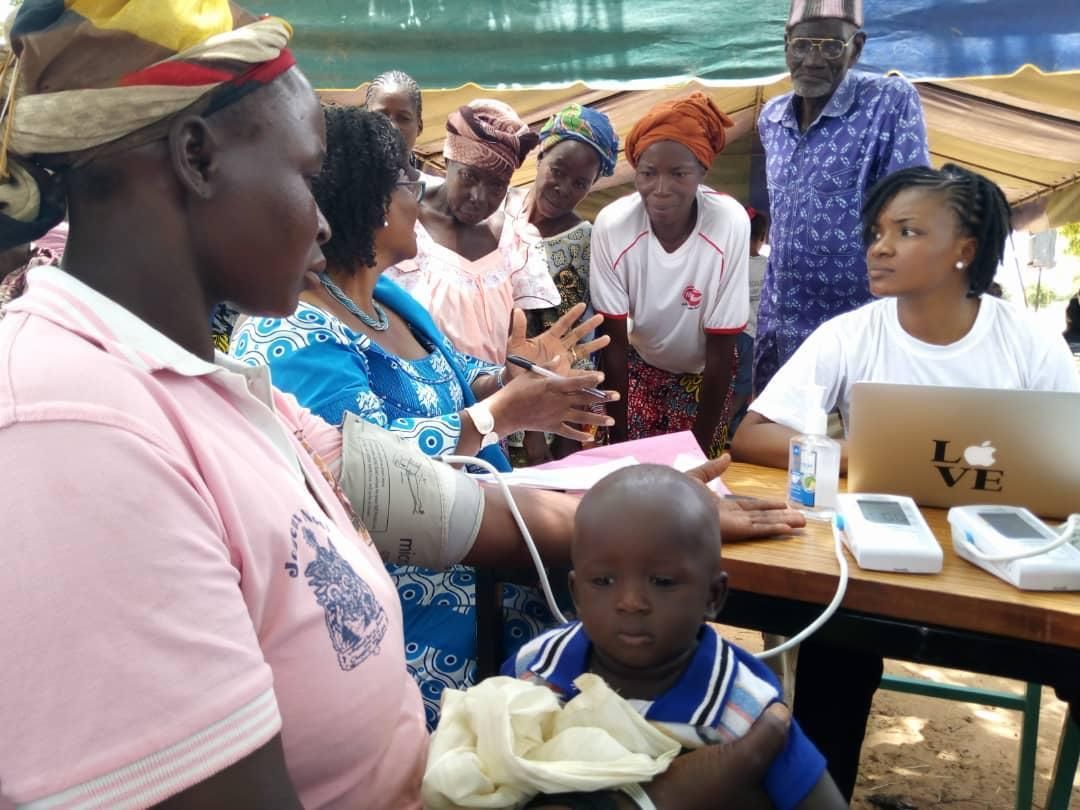
Our screening campaigns are planned with district health authorities and refer into their facilities. Our school programs run with school administrations. Our community charters are signed by the customary and religious leaders who already hold authority locally. We do not build a parallel system. We are the connective tissue between systems that already exist.
We integrate on purpose.
Every contact point is designed to deliver more than one thing, because missed opportunities are the most expensive failure in community health.
We measure everything, and we publish it.
Data is collected digitally, coded for privacy, and analyzed against research standards. Our evaluations go public.
We stay after the campaign ends.
We train local health professionals, we equip youth ambassadors, and we help families secure coverage, so that capability remains in the community when our vehicles leave.
The beginning
African Crossroad Development began with a screening campaign and a question nobody could answer.
The campaign went well by conventional measures. Women came, screenings were performed, positive results were identified and referrals were written. Then the team asked what happened next, and there was no answer. There was no record of who reached the district facility, no record of who could afford the trip, and no record of what became of the women who did not.
The same week, in the same community, a school enumeration found children who had been out of class for three years. Not one of them appeared on any list. Some of them were the daughters of the women who had just been screened.
Two programs, one household, and no connection between them. That gap became the organization.
What we have learned since
Integration is not a slogan, it is arithmetic
A single adolescent health visit that delivers four services costs marginally more than one delivering a single service, and delivers roughly four times the value. Every vertical program that refuses to share a visit is choosing to be expensive.
A referral without coverage is a letter, not a treatment
We added social protection work because our own follow-up data showed how many referrals were never acted on for cost reasons.
Digital enumeration changes what is possible
You cannot re-enroll children you cannot find. Mapping out-of-school youth with digital tools turned an unsolvable problem into a list of names and locations.
Traditional leaders are not an obstacle to route around
In the communities where we work with customary and religious leaders from the planning stage, attendance at campaigns is higher and follow-through on referrals is better.